Approach
Narcissistic Ornaments
Who do I see in the mirror: myself, or only the dress?
The question
I work with photographs from the world of fashion. These pictures have one aim: to make us buy. Someone who buys a garment they like puts it on and sees themselves in the mirror with the new piece. And then I ask: do they see themselves, or only the dress? Is the person lost because the eye stays on the product? To me that is a narcissistic way of looking. That is why I call my pictures narcissistic ornaments.
The source
I was inspired by the photographs of Oliviero Toscani, who made Benetton’s advertising for many years. Today I work with fashion photographs from Benetton and from other brands.
The icon
My model for the form is the medieval icon, above all the Russian icons, such as those by Andrei Rublev. The people stand side by side, flat and without space, on a golden background. The golden background is heaven. In my pictures it is painted in acrylic gold, sometimes silver. A mirror, too, has this golden or silver sheen.
The ornament
My second model is the ornament of the Orient, above all that of the Alhambra in Granada: patterns that repeat, mirror and turn, and show no human being.
From photograph to mirror image
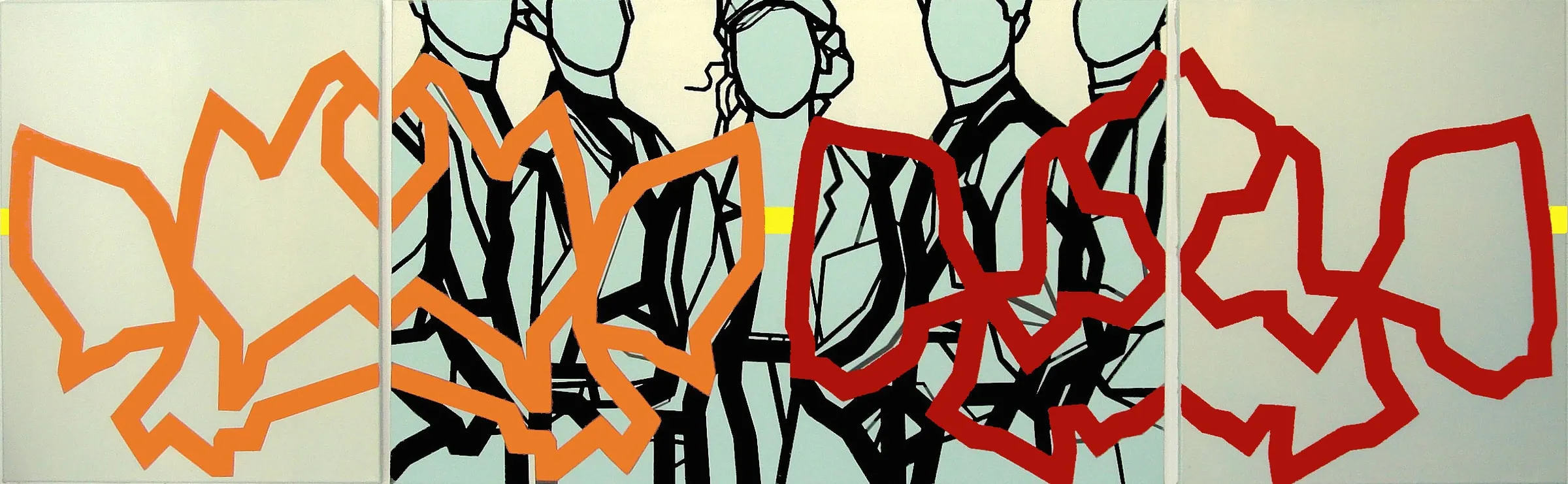
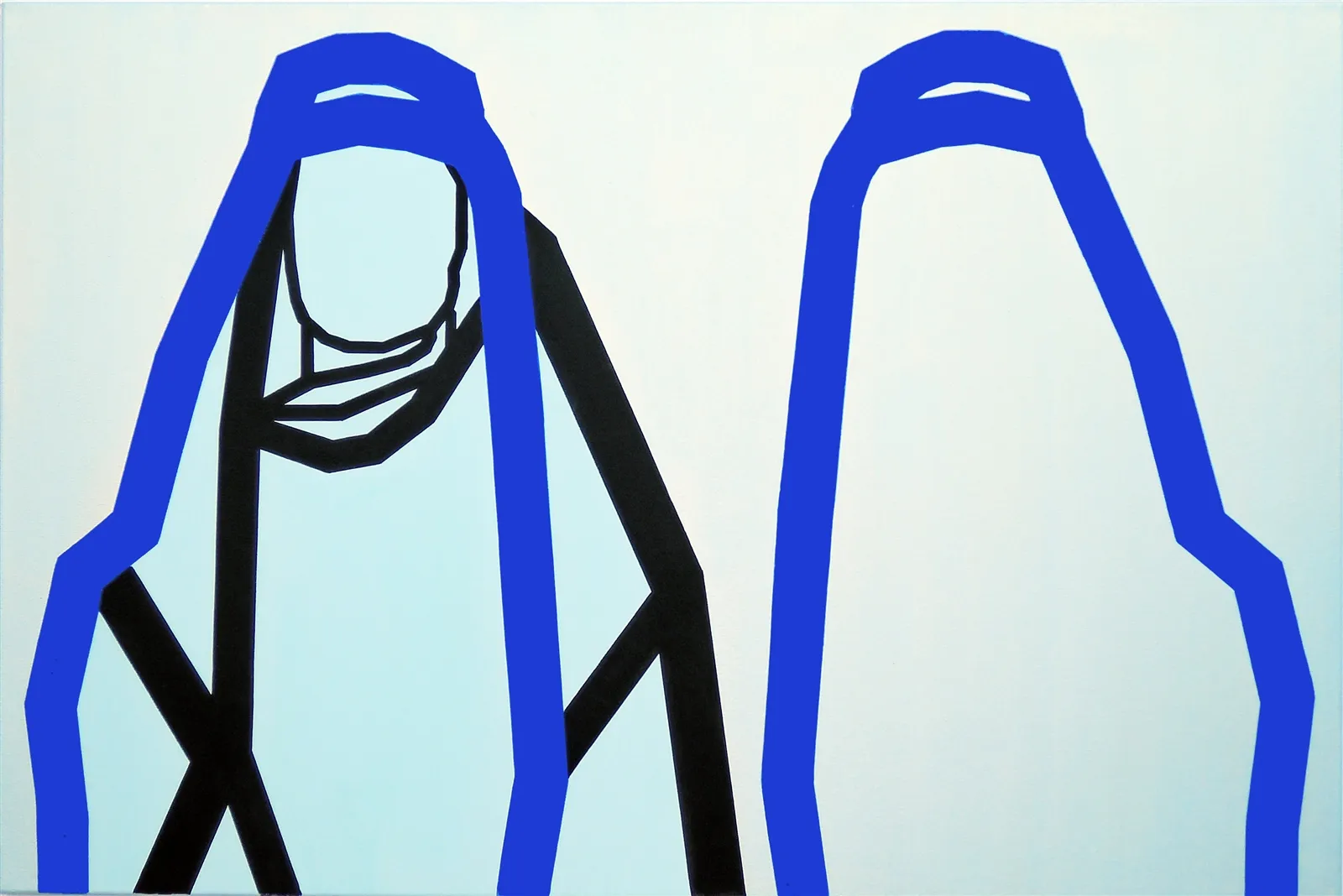
I draw the people from the photograph as black lines on the canvas. Over the lines I lay a coloured pattern; that is the garment. Then I digitise the picture. On the computer I erase the figures and keep working with the pattern alone: I mirror it, turn it and recompose it. I transfer this pattern onto a second, sometimes a third canvas. There, only the mirror image of the dress remains. A line runs through all the panels; it is the connecting element.
What remains
The person goes under. The product is at the centre, and it is reflected not as a person but as a pattern.
What others write
“One is reminded of the formal rigour of early medieval panel paintings.”
“Frontal depictions of people who look like icons, their faces already erased.”